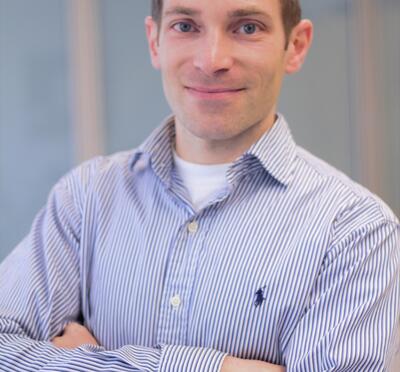
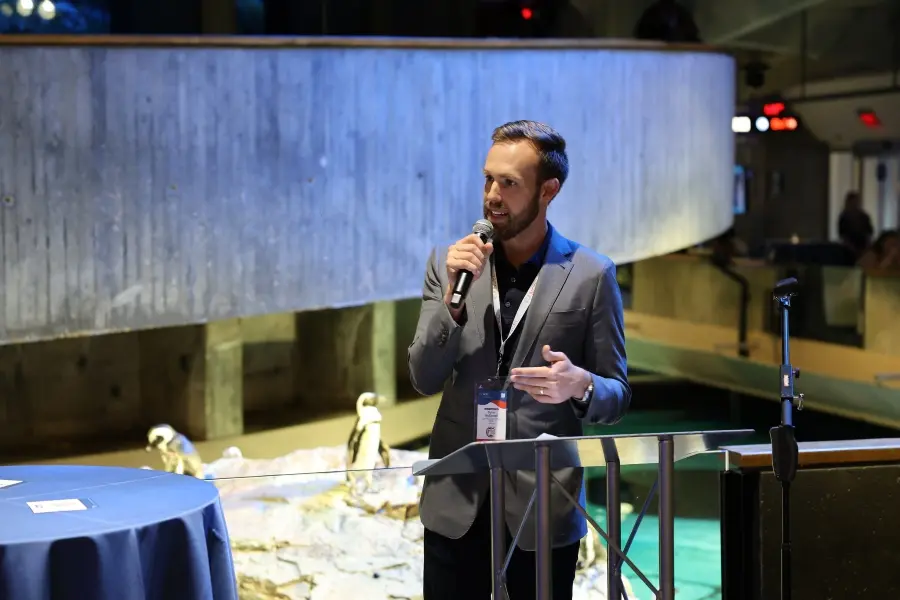
Dylan McDowell, ’14, graduated from Oregon State University with Honors Bachelors of Science degrees in fisheries and wildlife and in education. Since then, he has built a career at the intersection of environmental policy, science communication and public service. He now serves as the CEO of the National Caucus of Environmental Legislators (NCEL), a nonpartisan nonprofit that supports a nationwide network of state lawmakers working on environmental issues. In this Q&A, Dylan reflects on his path from the Honors College to national leadership, shares what inspires his work and offers advice for students interested in shaping environmental policy.

Q: What are you reading lately?
The Hidden Seasons: A Calendar of Nature's Clues by Tristan Gooley.
Q: Can you share a little about what you’re doing now?
I’ve spent the last 10 years working at the National Caucus of Environmental Legislators (NCEL), where I’ve supported hundreds of state lawmakers on a range of environmental issues. I lead a dynamic team of policy specialists covering a range of topics including clean energy deployment, outdoor engagement, ocean conservation, wildlife and habitat conservation, zero-waste solutions, and more. After graduating, I moved to Washington, DC to work for NCEL and lived there for nearly four years. I moved back to Oregon a few years ago and now live in Salem. I recently completed six years serving on Salem’s Parks and Recreation Advisory Board, where I served as Chair for nearly four years. I also helped co-found a nonprofit focused on safe bike infrastructure called Salem Bike Vision.
Q: What drew you to your current path? Was there a defining moment or influence?
During my final year at OSU, I saw a job posting for the Government Relations Office listed in the Honors College Monday Message. I had never engaged in political roles and had limited understanding of state vs federal government at the time. I took a chance, and ended up getting the outreach position. It ended up being the perfect opportunity for me in that I was able to apply my science education and communication skills in a way that helped inform lawmakers across the state. I had incredible mentors like Jock Mills on campus that helped me grow in the role, and I stayed over a year. This was a turning point in my career as I have now worked on state policy for more than 12 years, and it all started with that one job posting.
Q: Looking back, what are some of your favorite experiences from your time in the Honors College?
The small classes of the Honors College allowed for really rich discussions as well as building strong relationships with my peers. I always enjoyed the familiarity of the SLUG, where I was guaranteed to run into familiar faces. There was a real sense of community within the Honors College that I was part of, and many of the relationships I formed are ones I keep to this day, including my wife who I met in the Honors college.
Q: How did the Honors College help prepare you for where you are now?
The Honors College connected me with people and ideas that went beyond a textbook. I felt like the education and discussions in each of my courses helped me think bigger about subjects through interesting conversations with my professors and peers. Issues in life are rarely segmented by topic like a course, and the Honors College provided an interdisciplinary lens to complex topics in a way that created a helpful basis for the work I do today.
Q: What skills, habits, or perspectives from your honors experience do you still use today?
Honors courses always encouraged us as students to go beyond memorizing information to thinking about the “why” of topics. I distinctly remember my freshmen Honors biology lab being different from the non-Honors course after talking to my peers. We were encouraged to ask big questions, experiment, and have fun learning science rather than sticking to a strict step-by-step lesson plan. This distinction fostered a community of real learning and appreciation for scientific concepts that resulted in information sticking more than it would otherwise. I think about these lessons a lot when I lead events, manage employees at my organization, or even when parenting my 3-year-old twins.
Q: What advice would you give current Honors College students as they think about their futures?
There are so many incredible researchers at OSU, and the Honors College can help you connect with these experts directly. I would encourage students to have as many conversations as possible while a student to learn about possible career paths. I had no idea my current job existed when I started college. I would also encourage students to explore fields like finance and business, even if not directly related to their major. These topics have a lot of influence over many issues and having a stronger understanding of financial concepts will help students be more effective in their chosen field.
Q: What’s next for you? Any upcoming goals or projects you’re excited about?
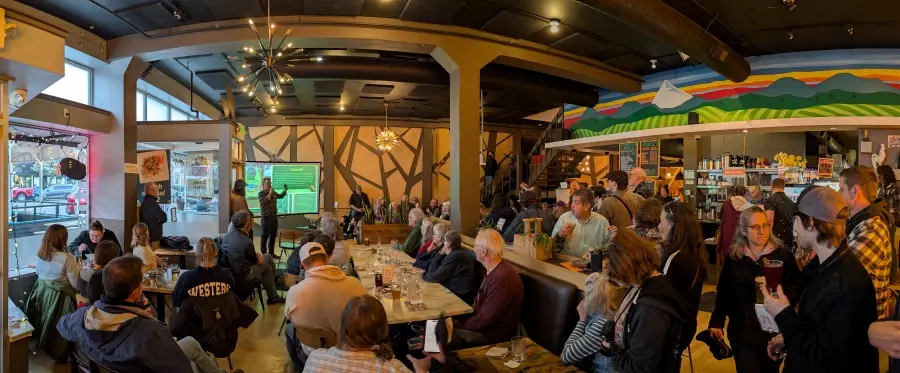
This year my wife, another UHC grad, and I launched a new community event called Salem Talks Science, where we feature community speakers at a science pub learning event every quarter. Our goal is to create opportunities for community learning and community engagement by hosting multiple events throughout the year that cover a wide range of topics and is fun for attendees of all ages. We are about to host our fourth event, and are planning to expand the effort next year with even more events and reach more of the Salem community. Our website is https://salemtalksscience.org/
Related Stories