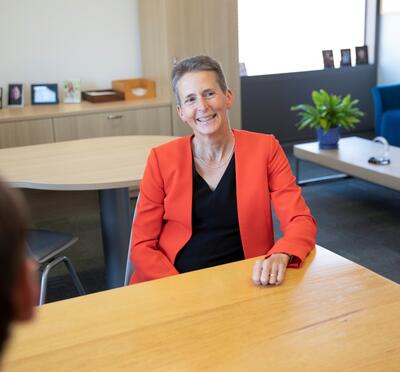
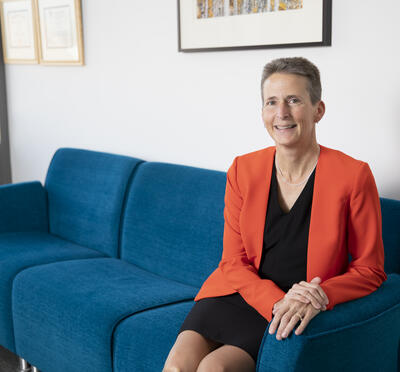
Toni Doolen’s approach to leadership drives results for the Honors College.
When Toni Doolen was named dean of the Honors College in 2014, it had just under 1,000 students in Corvallis. As she completed her tenure at the end of 2025, there were more than 2,500 honors students in Corvallis, at OSU-Cascades and online via Ecampus. Annual gifts to the Honors College have effectively tripled, averaging around $950,000 over the past three years. And its endowment has grown by 212% to $5.8 million.
But Doolen would be the first to say that numbers, while valid data points, are not as important as the people who have benefited from the honors experience. Not just students, either, but also faculty, staff and other stakeholders who share Doolen’s commitment to the college.
“People first is what it really means, at least from my perspective, when we say our students and employees are central at OSU,” she says. “That is, to me, what good leadership looks like.”
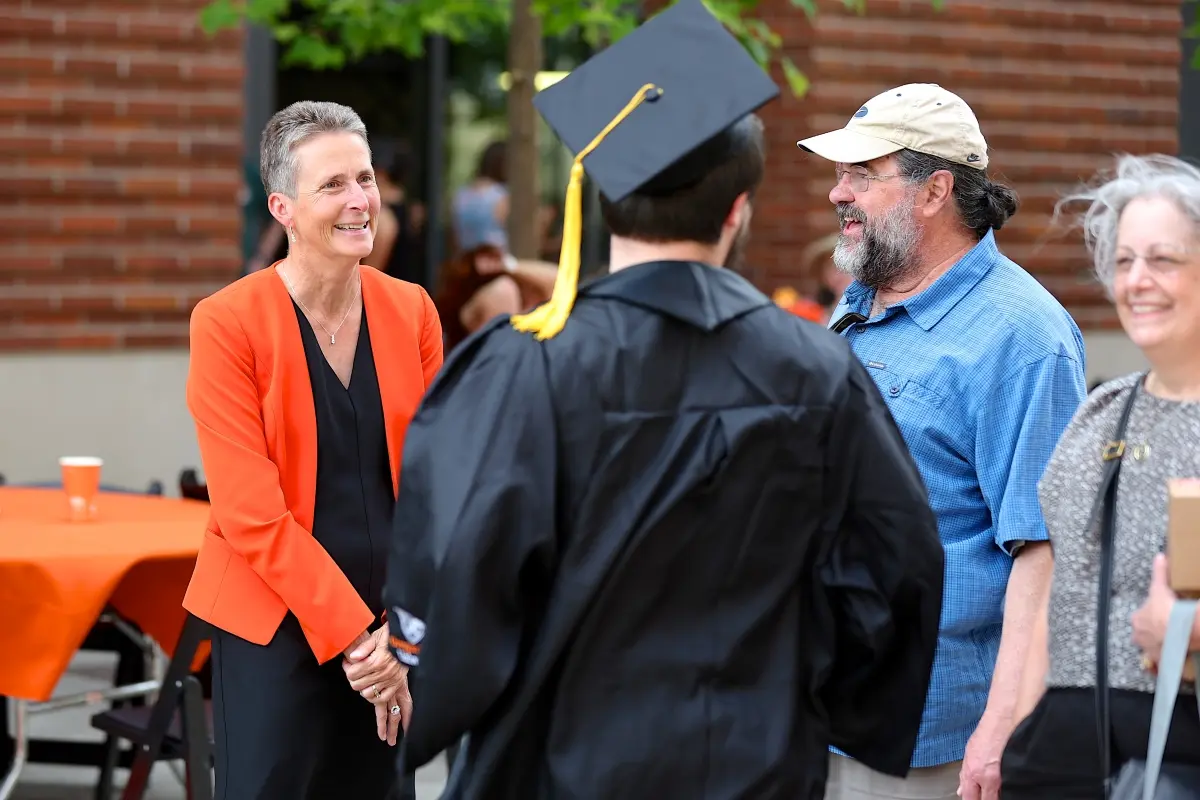
Doolen’s tenure has demonstrated such leadership from multiple perspectives. For students like Ana Tracy, it’s her accessibility. Tracy met with Doolen regularly, starting in her first year, and most of her friends have also had similar one-on-one conversations (Doolen says regular contact with students is what she loved most about her job).
“It’s easy to talk with her about your interests and challenges,” Tracy says. “As a first-year student, knowing the dean made me feel like I belonged and was welcome here.”
Tracy, who is in her fourth year studying biochemistry and molecular biology, found Doolen takes a genuine interest in students’ experience, connecting them with resources like scholarships, global opportunities and support systems across the university.
Eliza Barstow, a senior instructor in the College of Liberal Arts, has been teaching in the Honors College since 2016. She worked closely with Doolen while serving on the Honors College Council in the Faculty Senate, particularly as OSU became one of the first universities in the U.S. to offer an honors degree online.
“Toni was very concerned with inclusivity and equity,” and giving online students the opportunity “changes their lives,” Barstow says. “It’s very exciting for them, not only getting a college degree, but also to be in a program where there’s acknowledgement of their intellectual ability that a lot of them haven’t felt for years — or ever.”
Bastow says Doolen “has done an exceptional job of making an honors degree more accessible without at all undermining the quality of the degrees.” Students earning an honors degree remain highly motivated and accomplished, she says. “There’s just more of them.”
A big part of access is financial, and most of Doolen’s fundraising work focused on scholarships. Students pay a differential tuition to help cover the cost of offering honors classes. Doolen prioritized scholarships to fill the gap for students with high financial need, as well as scholarships to help fund experiential learning opportunities.
OSU Foundation President Shawn Scoville calls Doolen “a natural relationship builder who makes donors feel valued.” She gets to know them, asks for their input, and gives them a sense of ownership in helping the Honors College reach its goals, he says.
Scoville notes that Doolen doesn’t just achieve goals, she’s surpassed the Honors College campaign goal twice during her tenure. “There isn’t a goal you can set that she won’t blow past,” he says.
Doolen also built relationships with the Honors College Board of Regents. Ken Krane, the longest-serving member of the advisory board, says members encouraged Doolen to pursue initiatives to expand to OSU-Cascades and Ecampus, grow student enrollment — now 7% of OSU’s student population — and diversify student backgrounds. All are consistent with OSU’s land-grant mission accessible education, Krane says.
Joachim Strenk, now on the Board of Regents, served on the Honors College Parent and Family Leadership Circle when his daughter Jessie was an honors student. He says Doolen has been so successful “because she genuinely cares.” She had a clear vision for what she wanted to accomplish for the Honors College, and she included all of the stakeholders — students, parents, faculty and staff, donors and regents — in making that vision a reality.
Doolen’s engineering background — she had worked as a process engineer at HP before earning a Ph.D. in industrial engineering from OSU and then joining the faculty — is unusual for the dean of an honors program. But it’s that background that Strenk and others point to as critical to the ongoing success of the Honors College.
Doolen says all of her engineering training has made it essential to use a mix of qualitative and quantitative data when making decisions. “When I say data, I don’t just mean numbers,” she says. “Comments on students’ evaluations are sometimes more useful.”
She invested in a robust enterprise resource management system and prioritized having staff with strong data analytical skills “because if we don’t have data, it is hard to make good decisions.”
Tara Williams, now dean of Barrett, The Honors College at Arizona State University, was the associate dean of the Honors College from 2013 to 2020. She worked with Doolen on the plan to expand enrollment and the infrastructure needed to support it. Williams says Doolen collaborated with other academic deans to ensure there was sufficient bandwidth to offer more honors courses and allow faculty to serve as thesis mentors.
“She thinks carefully and strategically about processes and structures,” Williams says. The “comprehensive and collaborative way” Doolen developed the plan and advocated for expanding the Honors College, then enlisted partners in realizing that strategy “was a real lesson in leadership.”
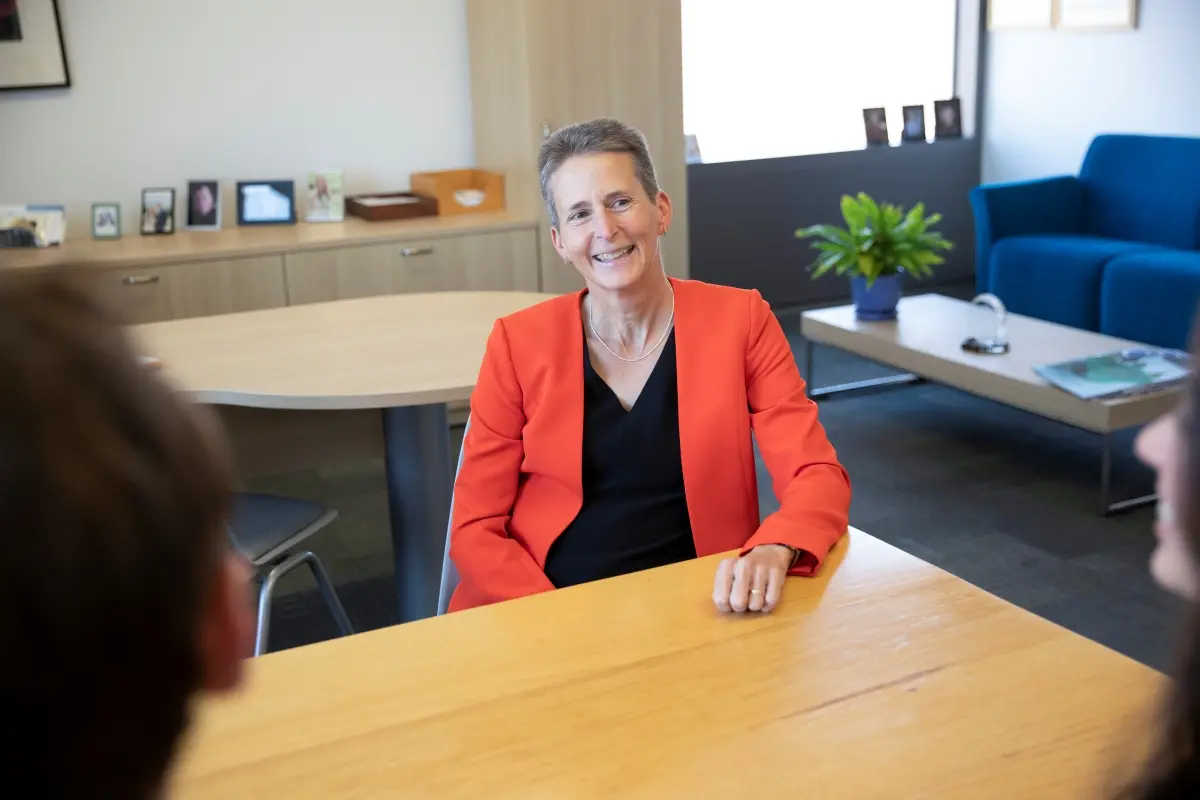
Williams says her experience working with Doolen at Oregon State has helped shape her approach at ASU. From her perspective, she has seen OSU’s national reputation rise. She says honors education leaders nationwide look to Doolen for her unique skill set and approach, like assessment practices that identify where interventions are needed to promote student success.
Williams, whose background is in English literature, has a favorite story about how Doolen welcomes all forms of expertise, which has enhanced her own leadership skills. After they had worked together for a few years, Doolen told her, “‘You know, I never knew what a medievalist was until I met you,’ and I said, ‘Well, that’s funny, because I never knew what a pivot table1 was!’”
Although they came from vastly different backgrounds, they “found ways to work together really productively and learn from each other,” Williams says. “That was what was so incredible about the chance to work with Toni.”
Dr. Troy Hall, the associate dean of the Honors College since 2024, became interim dean in the spring of 2026. The university anticipates launching a search for a new dean in the upcoming year.To honor Doolen’s impact, the Honors College will host a celebration recognizing her 14-year tenure as dean and 16 years of service to Oregon State University on Friday, May 29, 2026. Community members are invited to attend and can also recognize Doolen’s contributions by making a gift in her honor through the Honors College giving page.
Those interested in a deeper look at Doolen’s leadership and reflections on her tenure can read her full interview, available as an addendum to this story.
*A pivot table is a tool in a spreadsheet used to quickly summarize and analyze data, “the kind of tool that, for a medievalist, is not part of your training,” Williams says.
Related Stories