From creating zines in “Punk 101: An Exploration of Punk Rock through Zine and Do-it-Yourself Culture” to exploring morals through an extraterrestrial lens in "Science, Ethics and Star Trek” one- to two-credit Honors College seminars provide unique opportunities for honors students to explore a wide range of topics and connect with different perspectives they might not encounter elsewhere.
As a key piece of the HC curriculum, honors seminars bring students into small, dynamic learning environments where they explore ideas, engage in hands‑on activities and experience learning beyond the classroom. Troy Hall, associate dean of the Oregon State University Honors College, says that, with more than 50 seminar courses offered each term, “every student has the ability to find a course that is of interest to them.”
“We offer the richest mix of seminars found anywhere at OSU, spanning the humanities, social sciences, life sciences and physical sciences. Having no prerequisites, these seminars offer honors students a unique chance to explore new topics and passions,” says Troy. “Seminars offer both students and faculty the chance to explore ideas in a low-risk environment where students are encouraged to help shape the direction of their learning.”
Here are some of the seminar courses the HC offers.
Plastics for Poets
Skip Rochefort, an associate professor in the School of Chemical, Biological and Environmental Engineering, has researched plastics and taught engineering courses related to polymers to engineers for 50 years. He wanted to find ways, though, to “educate people that wouldn't normally know about plastics about plastics.” This led Skip to propose a seminar course in 1998 aimed at “engaging students across majors in learning about plastics.”
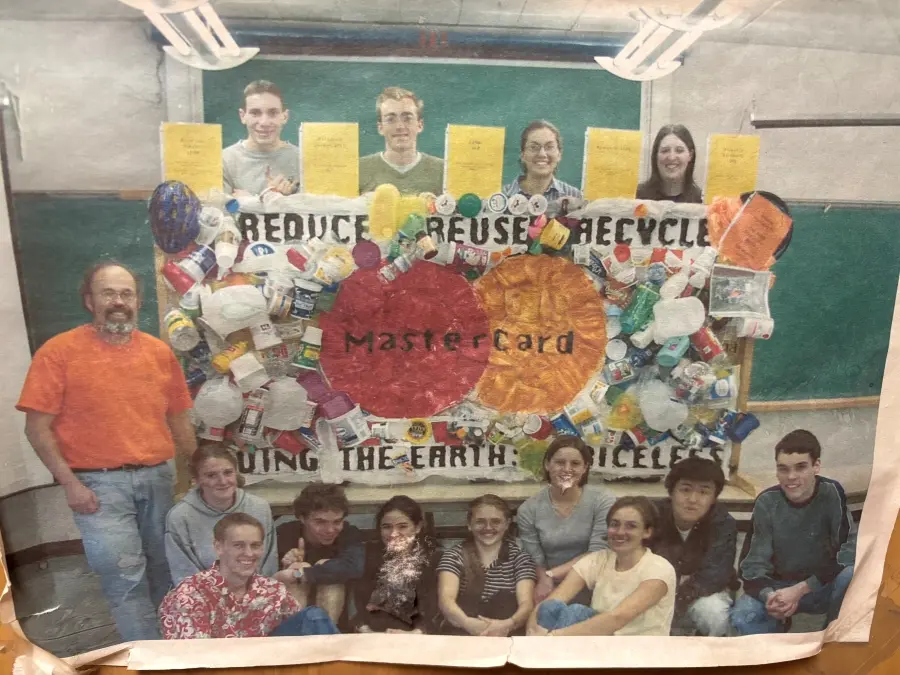
Students in the class learn basic information about plastics before exploring topics related to their social impacts, such as the impacts of unfounded health and safety concerns, the social justice implications of misinformation and the effects of plastics on the environment.
Skip notes that many “misconceptions exist around plastics,” which can lead to uninformed consumer and policy decisions. His course focuses on giving students a clear picture of the materials’ complexities. “I don't want students to become plastic nerds,” says Skip. “I just want them to understand the role plastics play in their lives and feel confident making informed decisions.”
As a part of the course, students also “complete a group project sharing what they learned in class with others in the community.” Over the years, projects have included plastic tic-tac-toe games, children's books, a song called “Benny the Bottle Beaver” and creating instruments out of plastic. Once, students created an eight-foot long “recycling bug” built from a variety of plastic materials that was displayed on the Memorial Union quad and during Earth Week events. One night, students even placed it outside the office of former Honors College Dean Joe Hendricks as a surprise.
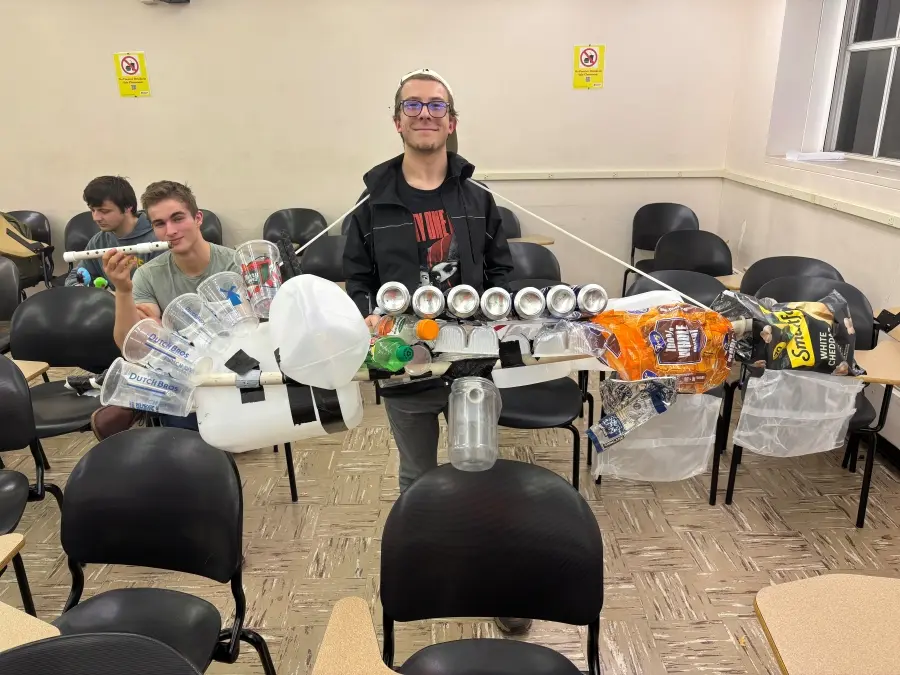
Skip says students “gain valuable knowledge about plastics by the end of the course” that shapes their personal perspectives. “Plastics are everywhere, and students take away something useful that they can apply for the rest of their lives.”
Imaging the Universe
Imaging the Universe instructor Tom Carrico has been looking up at the stars since he was a kid, eventually turning his fascination into a decades-long hobby photographing the night sky.

After retiring from an engineering career at HP, Tom wanted to devote more time to sharing his love for astrophotography with others. Eventually, a “desire to teach students something I was pretty sure that they hadn't seen before — something possibly outside their comfort zone” led him to propose an honors seminar in 2018.
While some students arrive with prior astrophotography experience, “for the majority of the class, it’s something they didn't really know they could do," says Tom.
“I don't think anybody has abandoned their major and decided to become an astronomer because of my class, and that's okay,” he jokes. “I still think that students enjoy the class a lot.”
Lectures cover astronomy, comets, astrophotography techniques and other foundational concepts. Students photograph the stars at Peavy Field with DSLR cameras or remotely through Tom’s telescope in Texas, then process the images using PixInsight, an image processing platform designed specifically for astronomical imaging, to create final photographs they often share with friends or family.

Tom says, “many students go out to take photos multiple nights,” and some even “pick up astrophotography as a hobby and stay in touch.”
He hopes his class provides “a little bit of an oasis where students get to park their life for a while, think outside the box of their majors and learn something totally new,” sparking curiosity “about the night sky and the world."
“Take my class, and I’ll show you the universe,” says Tom. “There's a whole universe out there to capture."
Theatre in Ashland
For students interested in theatre, the Theatre in Ashland course currently taught by Senior Instructor of Theatre Arts DeMara Cabrera provides an irreplicable opportunity to experience some of the best performances in the country.
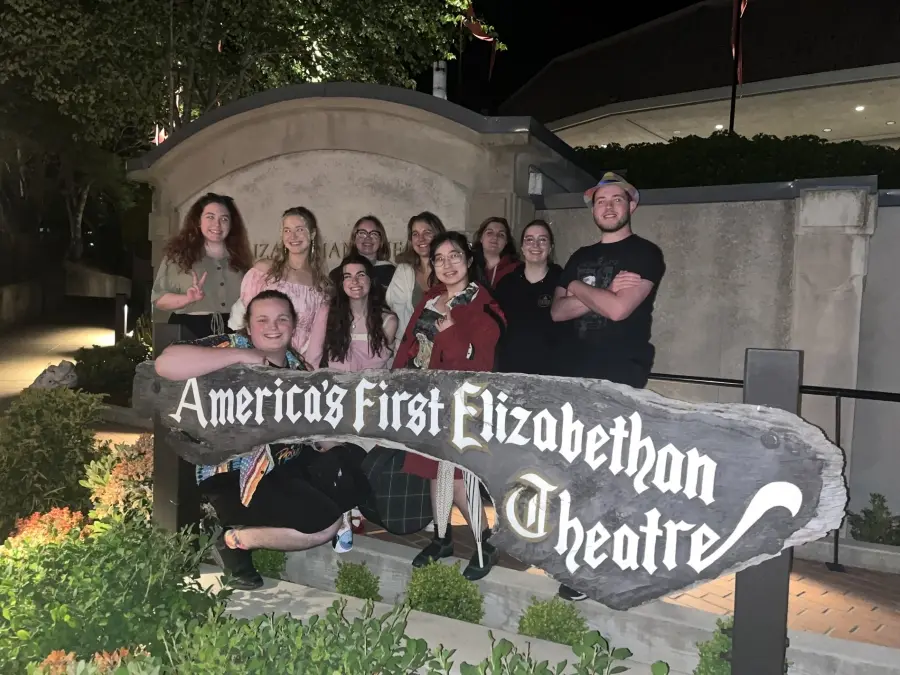
Students travel to Ashland, Oregon, for a weekend to attend the annual Oregon Shakespeare Festival, which features a range of award-winning productions. Students stay in a local hostel with a communal kitchen and dining area, which helps students get to know one another and build community.
Throughout the weekend, students watch three shows and attend prefaces that provide background for each production. Students also have free time to explore Ashland with one another.
The class – which dates back to the early years of the Honors College in the late 1990s - offers opportunities to “meet new people, have fun and see amazing performances,” says DeMara. “After returning, students write a journal response about the shows they experienced, then create and deliver a presentation that revisits the material through the lens of their own interests.”
Past projects have included redesigning wedding dress costumes used in a production, translating a play’s dialogue into modern text-message language and creating presentations that explore the history of people of color in the Old West inspired by a western‑themed performance.
“It's not just a class — it's a whole experience,” says DeMara. “It's an adventure with 20 other students, where you get to share something really special while watching top-notch entertainment.”
DeMara says it is “particularly rewarding to see repeat students”— one student has taken the course three separate times.
“Every time I teach this course, I’m like, ‘I get paid to teach this class? I love bringing students from all majors into the thing I am most passionate about. It is a wonderful experience.”
Exploring the History of Commerce Through Board Games
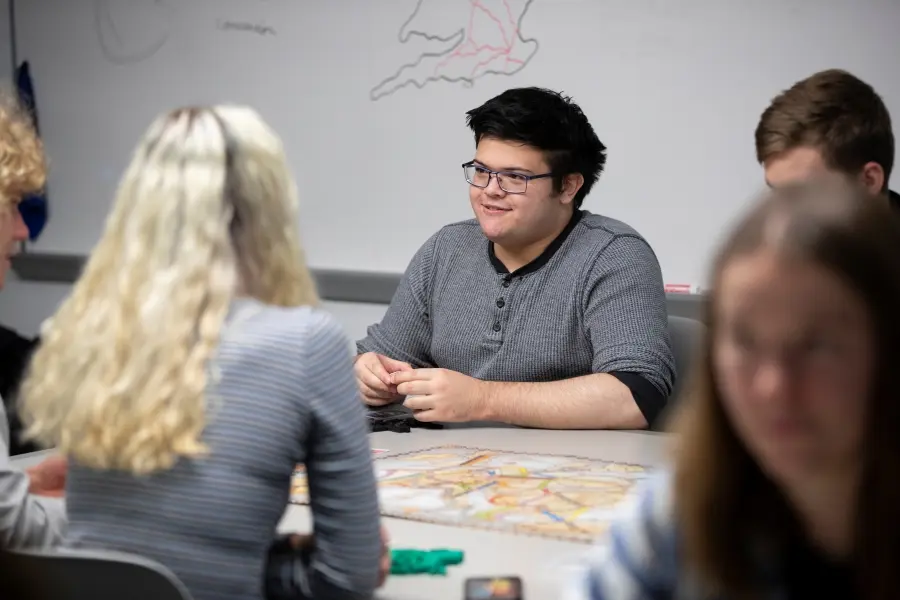
Inspired by a colleague who taught a seminar course on comic books, Senior Instructor of Finance Dennis Adams decided to propose his own. Each term, students in his Exploring the History of Commerce Through Board Games seminar examine economics and historical themes through various games, from Ticket to Ride to Splendor and Carcassonne.

Each class begins with a brief student-led discussion before breaking into groups to play the selected board game. Afterward, they complete a reflective writing prompt exploring the course's themes — including the relationship between commerce and violence and the role of trade in shaping human culture. Dennis says, “students have a lot of power in how the class plays out,” with past students “bringing food and curated music playlists related to the weekly historical themes into class.”
Many students are “hooked into the class because playing board games is fun,” he says, and they create “a positive environment where students get to know each other and become competitive.” Still, he notes that learning runs deep. “By the end of the class, students report that they expanded their horizons about how the world works,” he says.
“We play a lot of games, which is fun, but we also think about big questions and themes many students haven’t encountered before.” Dennis encourages students to “come for the games and stay for the deep thoughts.”
Trauma-Informed Care
Beth Rankin, an assistant professor in the College of Education, says her seminar on trauma-informed care is increasingly relevant and provides valuable knowledge for students across disciplines.

“We are in an epidemic of trauma, where two-thirds of children and 70% of adults have experienced at least one traumatic event in their life,” says Beth. “Students are likely to meet someone whose life is impacted by trauma and knowing how to approach that is important. Experiencing multiple traumatic events can lead to increased negative life outcomes.”
The first half of the course focuses on the prevalence of trauma, including childhood trauma and its impact on developing brains, as well as causes of adult trauma. In the second half of the course, students “learn how to apply principles of trauma-informed care throughout their lives and future professions.” Students also learn about resilience, self-care for helpers and managing triggers.
The term culminates in students creating a proactive trauma management plan for a fictional client, demonstrating how they would identify, manage and mitigate triggers.
Beth says, “while many students who take the class are interested in pursuing careers in healthcare,” students majoring in “everything from music to fisheries and wildlife sciences to computer science have found great value in the course, whether it be relevant to their family or personal situations or just to be generally informed about trauma as they go about their lives.”
“My favorite saying is, trauma informed care is just good care,” says Beth. “And I think that applies to all majors as well! Trauma informed healthcare is just good healthcare, and trauma informed education is just good education. Everyone has ways they can contribute to the conversation based on their different majors.”
More information about current seminars and other honors courses can be found on the HC schedule of classes website.