The honors general chemistry sequence is one of the longest-running honors offerings at OSU, and the three-term series gives participating students access to advanced laboratory experiences, faculty mentorship and a learning community that often shapes their academic paths in their very first year.
The year-long series of classes, which teaches foundational chemistry concepts and skills to undergraduate students majoring in the sciences, has been offered as an honors course since the Honors College was founded in 1995. It was the college’s first full-year, multi-section course, initiated and originally taught by now-retired chemistry professor Jim Krueger. Jim also played a critical role in establishing the Honors College and was an early exemplar of the engaged and innovative teaching style that continues to characterize honors course instruction. He reflected in a 2019 interview that “teaching honors gen chem was probably the best teaching experience of my career overall.”
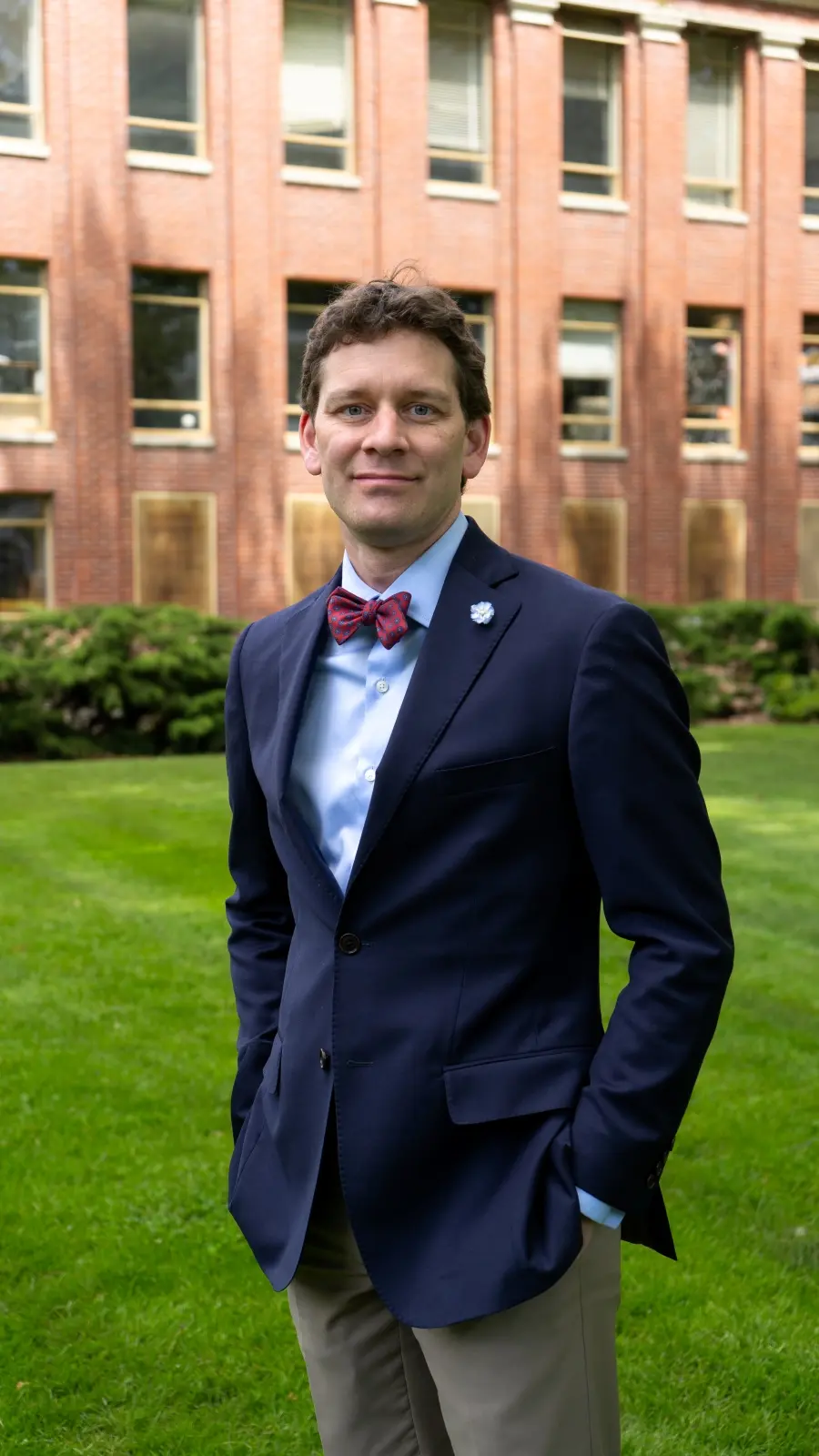
This sentiment is echoed by Michael Burand, an associate professor of chemistry who oversees all 200-level general chemistry laboratory courses. Michael also taught the first-term lecture course for honors general chemistry in fall 2024 and 2025. “We all love teaching the honors lecture,” he says, speaking both for himself and his colleagues in the chemistry department. “I think we’d all teach it every term if we could.”
What makes honors general chemistry a uniquely rewarding experience for students and instructors alike?
“A big part of it is the MOF lab,” says Karlie Bach, a chemistry Ph.D. student in May Nyman’s research group and head teaching assistant for general chemistry at OSU. Karlie taught the honors lab section from 2022 to 2023 and has worked with Michael to develop unique chemistry lab projects for honors students to engage with every term. One of these projects — the MOF, or metal organic frameworks lab — takes place in the spring and is a defining feature of honors general chemistry.
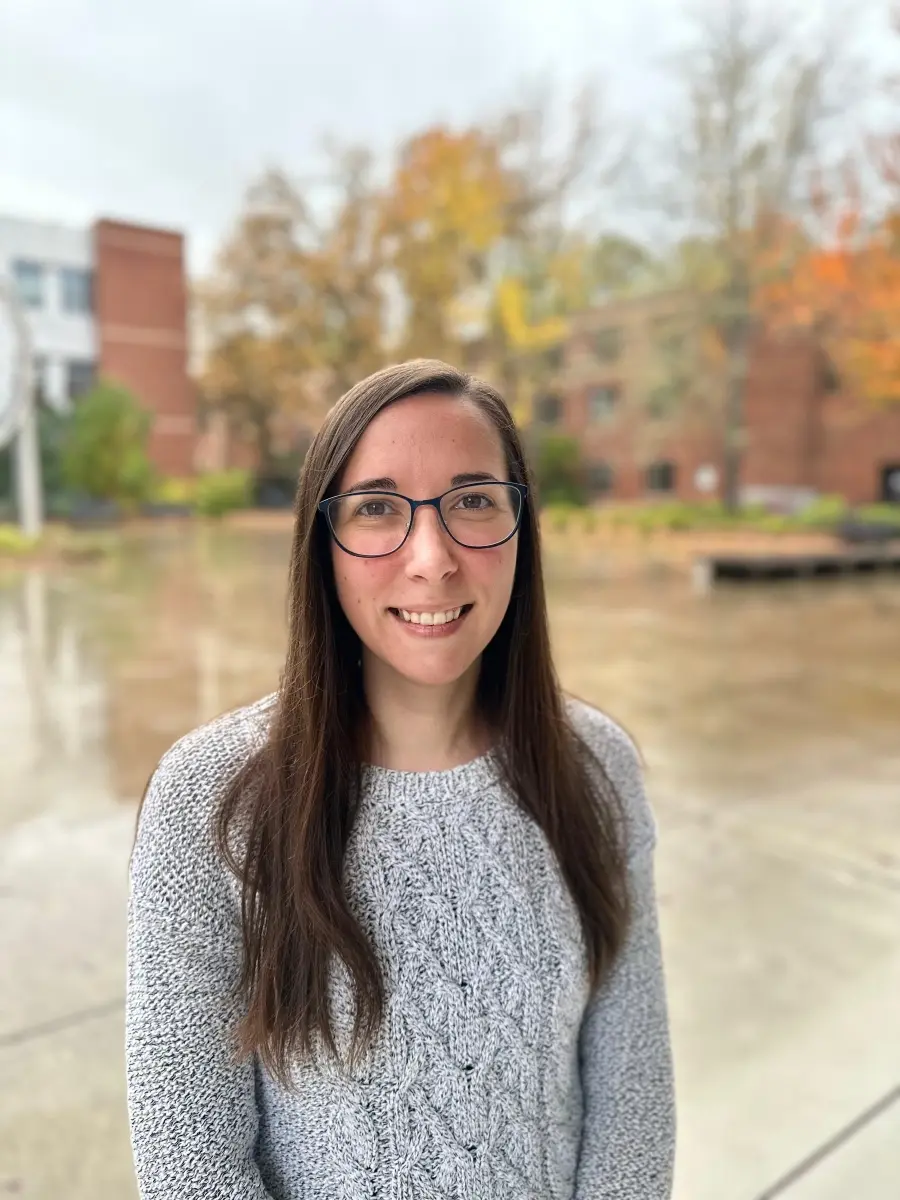
“The MOF lab gives honors students a really unique experience where they get to synthesize this compound” — a MOF — “and test it in a real-world application,” says Karlie. “They synthesize and characterize it themselves. Then, they visit the OSU research team that focuses on metal organic frameworks and see the instrumentation they use.”
One technique used to study MOFs is powder X-ray diffraction, and honors students get to observe this technique in action. “Having anything to do with powder X-ray diffraction in a general chemistry course… that Venn diagram doesn’t usually overlap,” Michael comments. “So even seeing that equipment in use and analyzing the data it collects is infinitely more than the average general chemistry student in the United States gets to experience.”
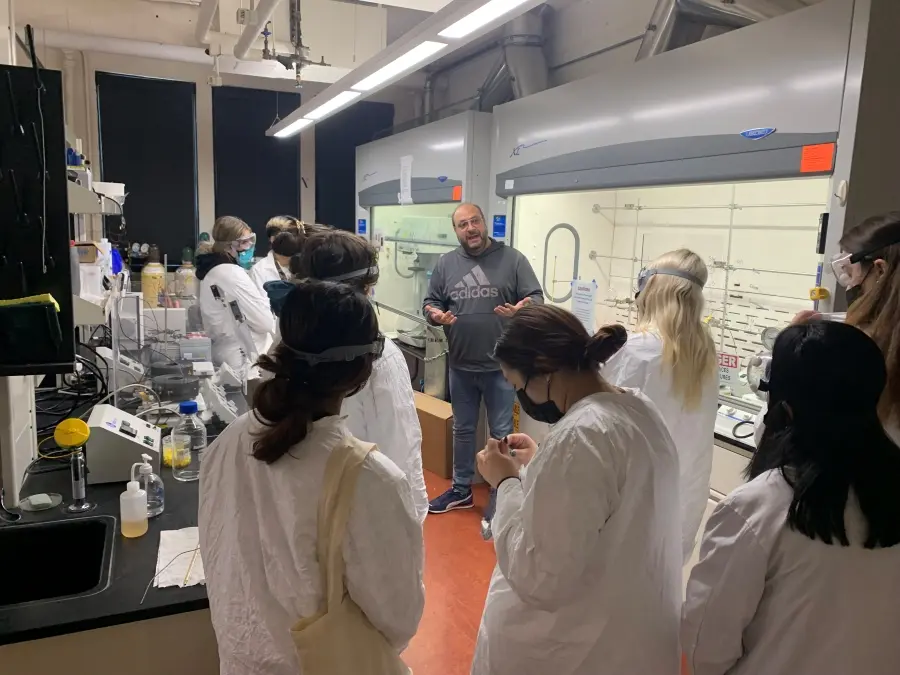
Following MOF synthesis, students test their compound’s ability to remove harmful contaminants from solution, tying the teaching lab to the real world. The term culminates with a poster presentation where students present their MOF research to the chemistry department. “We talk with students about how to deliver an elevator speech of their research and how to field questions,” says Karlie. “For students moving into their own honors theses, this full-circle scientific process — compound synthesis, testing, analysis and finally presentation — provides a valuable preview of the world of research and prepares them with skills in scientific inquiry and communication.”
The MOF lab often becomes a gateway for students to their future thesis work and mentor. “We’ve had a lot of undergrads who participate in that project and then reach out to Dr. Stylianou and ask to do research in his lab,” Karlie says, with many completing theses under his mentorship.
Kyriakos Stylianou, an associate professor of chemistry, is “the faculty member who gets credit” for the MOF lab, says Michael. “When we incorporated this project into our honors general chemistry lab program in 2022, it was unique to OSU. To our knowledge, no other general chemistry program in the world was doing this project."
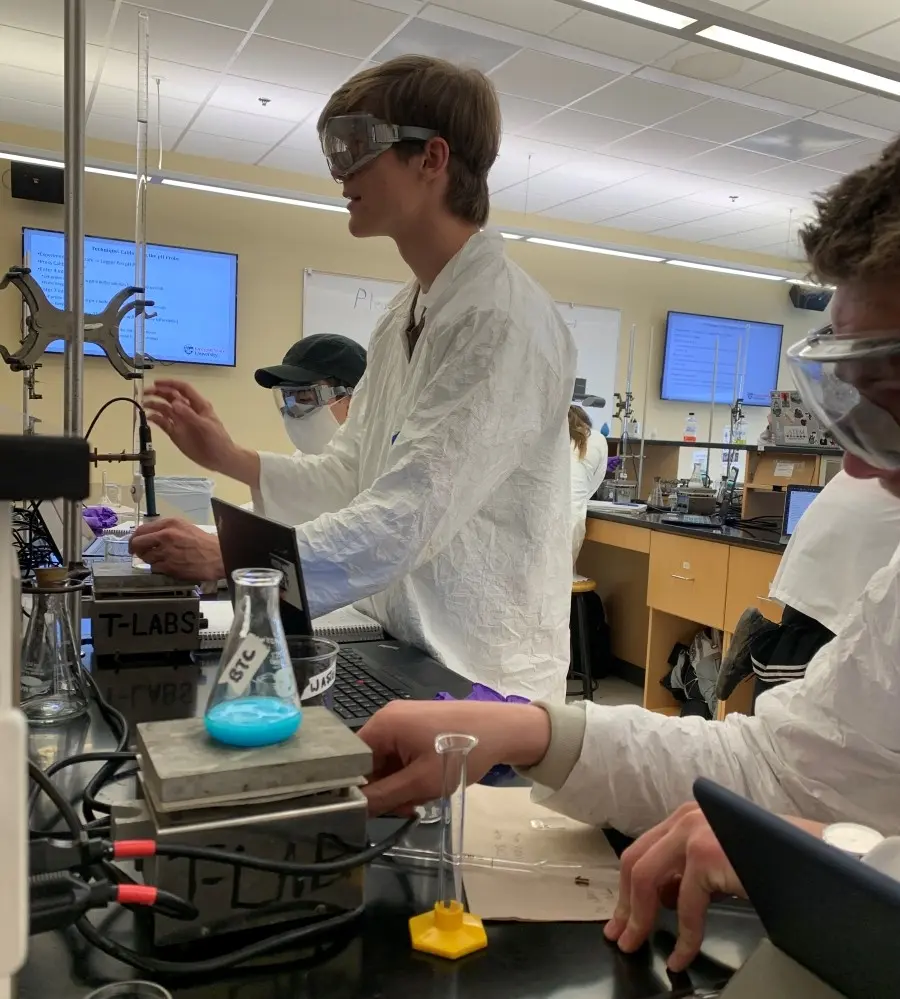
While the honors course sequence culminates with the MOF lab every spring, honors students also engage with a unique lab project in the winter after mastering fundamental techniques during fall. “We’ve done things like ferrofluid synthesis and enzyme kinetics… experiments that you simply can’t do in the non-honors section because scaling to 1,200 students isn’t feasible,” says Michael.
The honors general chemistry program also promotes connection and community that proves valuable during the series and beyond. “Honors students gain a tight-knit cohort of classmates,” says Michael. “There is only one honors lecture section, and it’s relatively small with about 70 students. And there are only three honors lab sections, so you get to work with the same people three or four times a week, fall, winter and spring. You have the same TAs every term. For first-year students especially, it’s valuable to find that camaraderie in the classroom as well as gain friendships that extend far beyond.”
From a TA perspective, Karlie also reports value in instructing the same students for an entire year. “You really get to know your students, and they remember you. Many times, when I’ve run into former honors students on campus, they’ve stopped to tell me things like, ‘I added a chemistry minor,’ ‘I changed my major to chemistry’ or ‘I just wanted you to know that you really made chemistry accessible to me.’ I ran into a student at an astronomy night a couple weeks ago, and she told me that she got into graduate school to pursue a chemistry Ph.D.. And she said, ‘I hated chemistry before I had you, so thank you!’ Those stories are what make it so rewarding for me.”
What makes the program rewarding for Michael is twofold: first, he appreciates “seeing students engage actively with the greater depth of understanding” that the honors course aims to provide. Second, honors students provide him with opportunities to “grow his own knowledge,” by asking deep and insightful questions. “It’s always a bit humbling when I teach that honors lecture,” he says. “I can’t always answer students’ questions right away. I take them back to my office to marinate on. I consult my colleagues who are experts in the relevant field. Then I return to students with what I’ve learned, and we have great conversations. I love to learn, and that’s one of the most rewarding things for me, is that we — the students and I — can learn together.”
More information about honors courses can be found on the HC schedule of classes website.