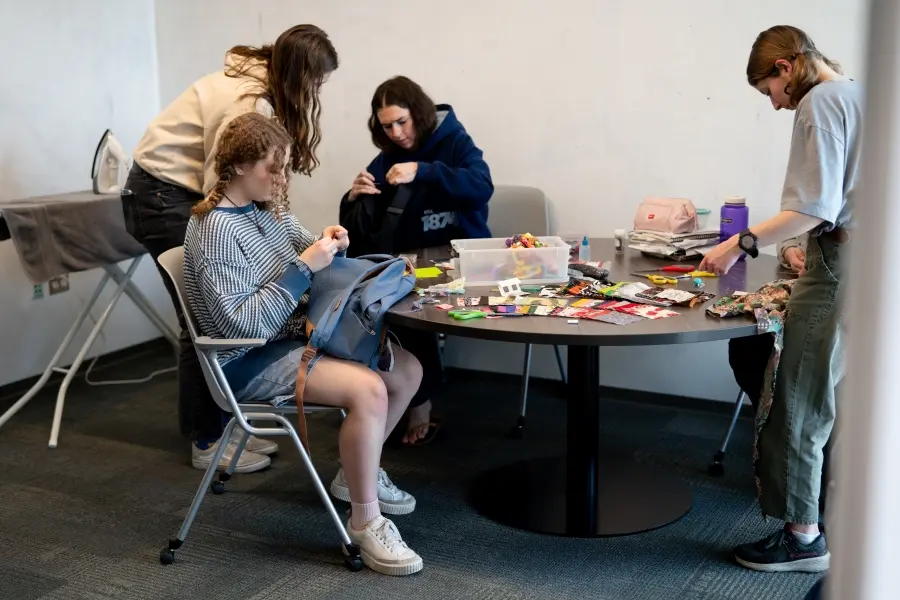
The steady tick of a sewing machine, the sharp snipping of scissors, the steady patching of shoes and clothing, the addition of shoe polish and a panoply of secondhand clothes filled the SLUG on a weekday in early March for the first ever Honors College Thrift and Repair Fair. The event was run by students in the spring section of The History & Future of Thrifting & Secondhand Economies seminar course, taught by Honors Alumna and History Senior Instructor Katherine Hubler, ’01. The fair helped students refresh their styles and extend the life of their clothing and apparel.
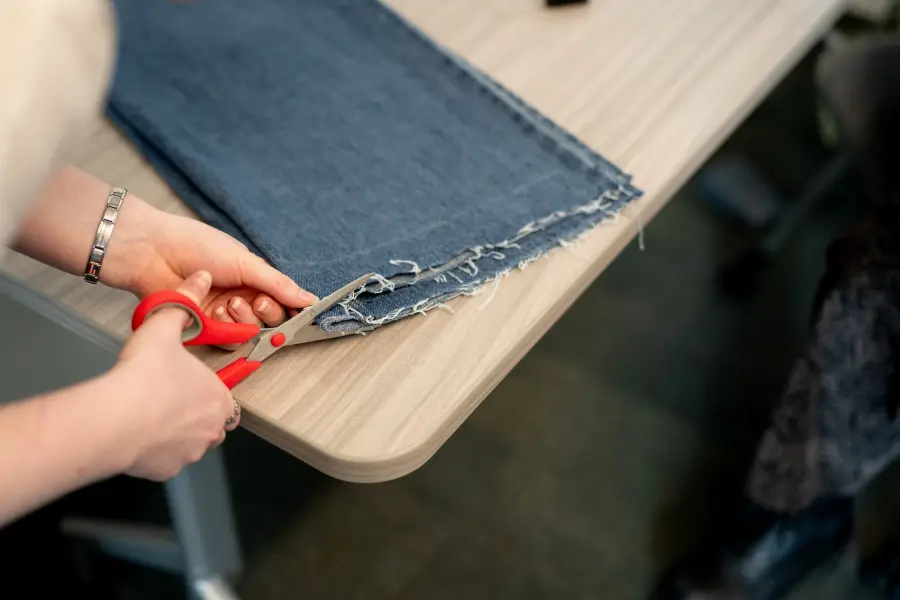
The event featured a student-sourced clothing exchange where attendees could swap garments, plus several hands-on stations led by students from the course. At each station, student volunteers repaired items and taught attendees how to do the work themselves — showing how to patch holes in pants and shoes, fix backpacks, hem clothing, polish scuffed boots and more. They also shared additional resources on apparel repair and sustainability. Sewing experts from the Craft Center were also on hand for additional support and guidance. “Hosting the fair provided a hands-on element to the topics explored in class,” says Katherine. “It tapped into my students’ passion and skills so the event would really be a peer-to-peer resource event.”
In the seminar, students examine the history of thrifting and secondhand clothing markets from the eighteenth century forward through cultural, social and economic lenses. “We dig into changing attitudes towards used clothing as well as the moral issues, misconceptions, and issues of resource management that have surrounded the secondhand clothing trade since the 1700s,” says Hubler. “There’s a strong undercurrent of sustainability in the class.”
Katherine proposed the course as an Honors seminar “after reading up on the history of the secondhand ‘rag trade’ and noticing more thrifting” amongst students during COVID. “The course involves a lot of reading about the history of secondhand clothing but also gets students out of the classroom and engaged in experience-based learning” she says. In addition to hosting the Thrift and Repair Fair, students source and refurbish an item of clothing, visit non-profit thrift stores and map the trajectory of used clothing after donation.
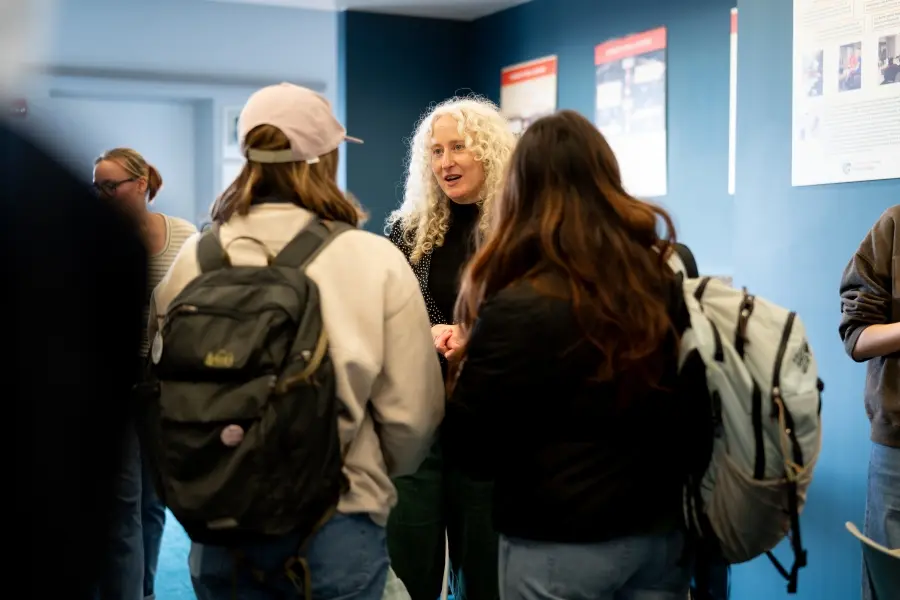
Rex Pelker, a fourth-year natural resources major, says he “likes to go interdisciplinary for honors courses.” “The overlap with sustainable clothing and natural resources — water resources, energy efficiency and reducing the production of new items — motivated me to take the class.” A former Sea Scout, Pelker honed his boot polishing skills preparing for parade marches and brought that expertise to the fair. He was one of three students who staffed the shoe station, helping peers extend the life of their footwear.
“The repair fair encourages people to look at clothing and ask, ‘Do I really need this? Could this go to a better home?’” says Rex. It also encourages them to examine discarded items and think, ‘Could I breathe new life into it?’”
Fourth-year industrial engineering major Scott Neupert said the seminar reframed what happens after donation. “It was eye-opening to learn about secondhand economics and the shift towards the globalization of the textile reuse market,” he says. “So much still happens with donated clothing. What we perceive as the finish line is often just the start.” Neupert also helped at the shoe repair station and called the fair “a great opportunity for students to fix and extend the life of their clothing.” Second year biohealth sciences major Peyton Hermes, who learned to sew when she was young, helped run the sewing station. “The fair helped many students repair items for free and had a positive impact on the community,” she says. “The seminar is designed by Professor Hubler to be highly interactive and collaborative. I enjoyed learning about the history and origins of Salvation army, how pawn shops branched out from thrifting and how the feminist movement intersects with thrifting. The impact of thrifting on history is much deeper than I realized.”
“As long as clothes have existed, people have been repairing them, refurbishing them and trading them,” says Katherine. “The thrifting that students engage in these days is just the most recent and familiar iteration of that long history. I hope students leave class with a broader awareness of the longstanding relationship between people, clothing and secondhand markets. Fixing and trading our clothing is practically within our DNA. I want to help students reconnect with that reality to make garment repair and reuse seem less daunting.”
The History & Future of Thrifting & Secondhand Economies seminar course is taught both on campus in Corvallis and online through Ecampus. The Thrift and Repair Fair will become a reoccurring annual event. Information about upcoming sections of the course and other Honors College courses can be found on the HC Courses website.